Building a Commercial Property Portfolio Inside Your SSAS
Written by Matt Lenzie
Former Banker & Corporate Finance Partner
Building a Commercial Property Portfolio Inside Your SSAS
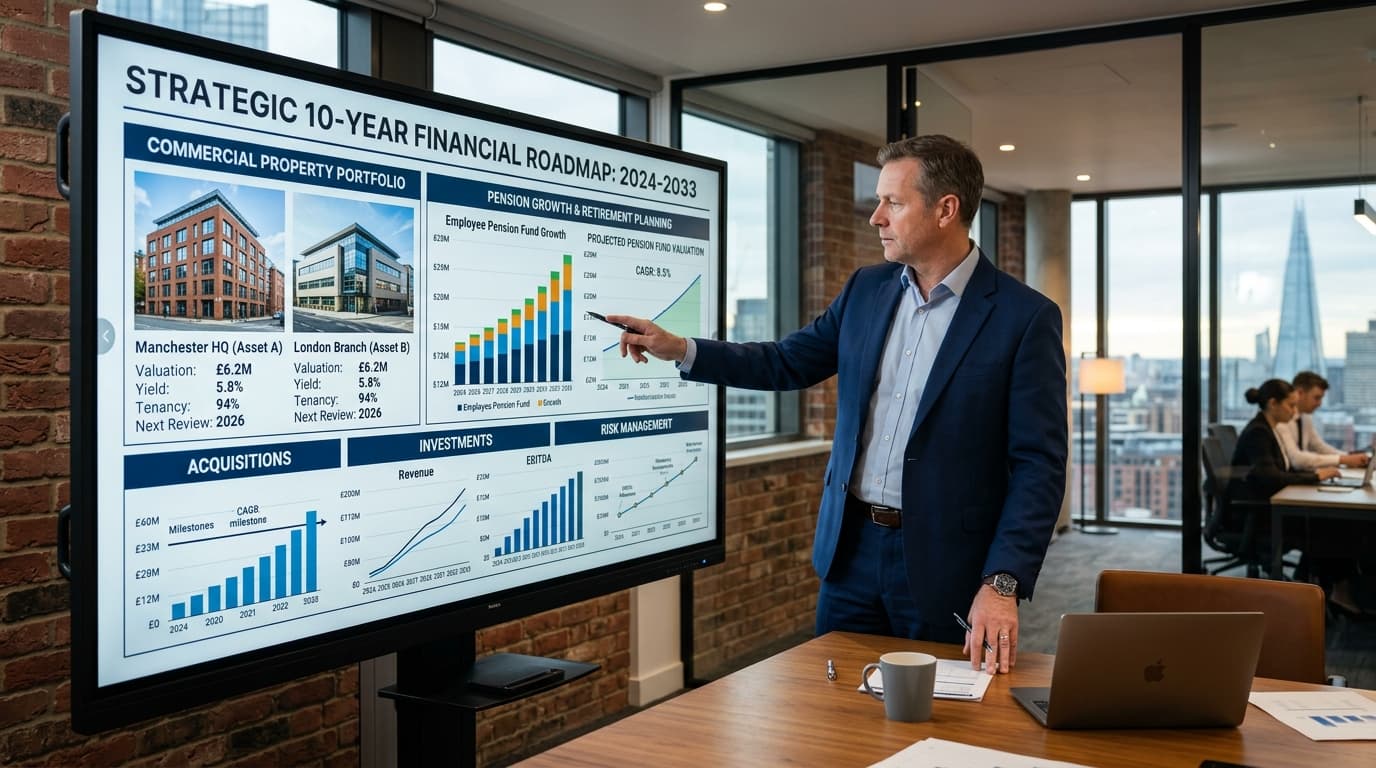
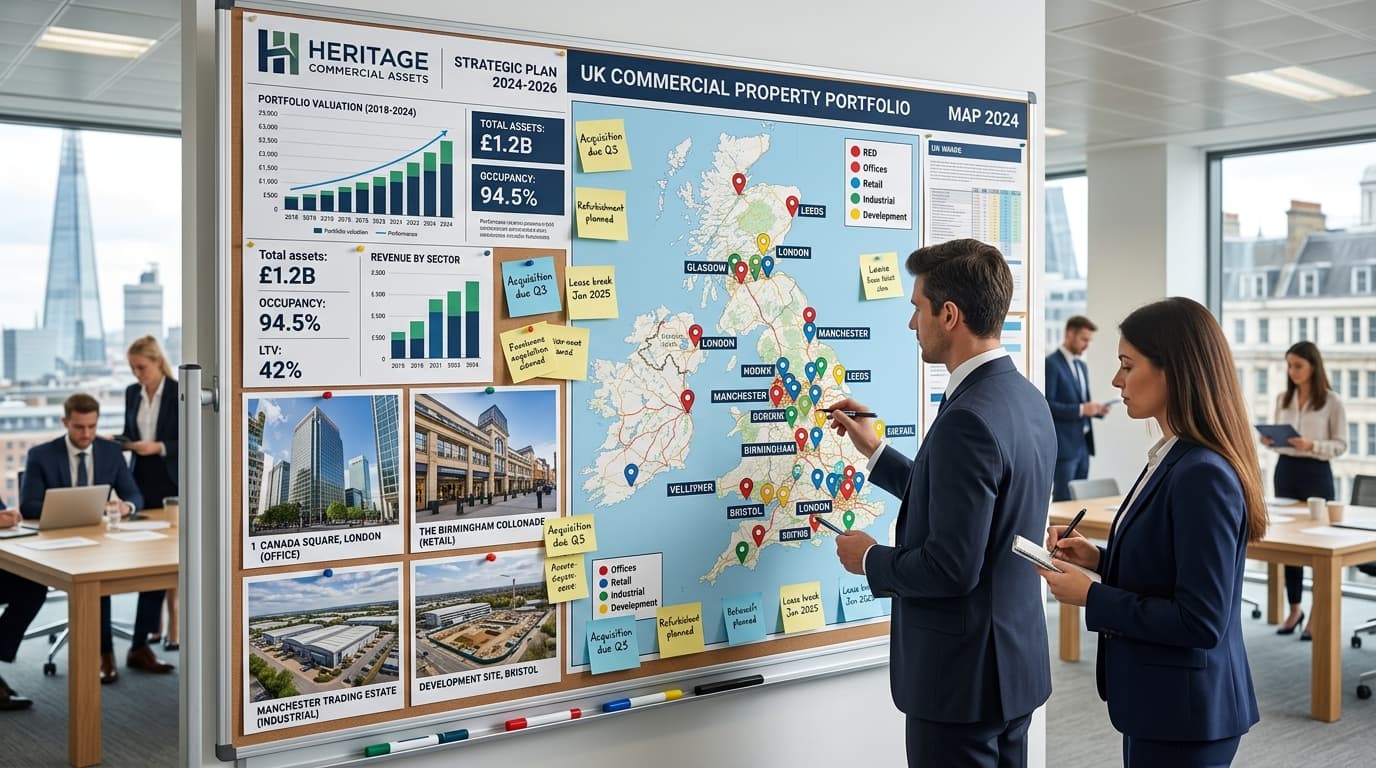
For business owners who understand the tax efficiency of SSAS property investment, the natural ambition is to go beyond a single property and build a genuine portfolio. A multi-property SSAS portfolio can provide diversified income streams, reduced concentration risk, and a powerful engine for tax-free wealth accumulation over a 10-20 year investment horizon.
But portfolio building requires more than identifying attractive individual properties. It requires a coherent strategy — one that sequences acquisitions sensibly, manages cashflow at each stage, and plans for the eventual exit or benefit crystallisation. This guide sets out the key principles.
Why Build a Portfolio Rather Than Own a Single Property?
Many SSAS trustees make their first commercial property purchase, collect rent for a few years, and never revisit the strategy. This is a missed opportunity. The case for portfolio building rests on several advantages:
- Income diversification: Multiple tenants across different property types reduce the impact of any single vacancy or lease expiry
- Risk reduction: Concentration in a single asset — particularly if that asset is also occupied by the sponsoring employer — creates significant downside risk if the business or the property market underperforms
- Compounding rental income: Reinvesting net rental income (above mortgage interest) builds the scheme's cash reserve, which can fund further equity contributions on subsequent acquisitions
- Leverage efficiency: As existing properties appreciate, refinancing releases equity to fund new acquisitions without additional employer contributions
"The best SSAS property portfolios we see are built with a 15-20 year investment thesis. Each acquisition is made with clarity about how it fits into the overall scheme strategy — not just whether it looks good in isolation." — Matt Lenzie
Phase 1: The Foundation Purchase
The foundation purchase is the most important decision in a portfolio building strategy. It establishes the precedent for lender relationships, scheme administration processes, and trustee governance. Get the first deal right and everything that follows becomes easier.
Key criteria for the foundation purchase:
- Strong tenant covenant: A financially robust tenant reduces void risk and produces a mortgage-able income stream. For connected party transactions, the employer's strength matters. For third-party lettings, aim for institutional or long-established tenants.
- Good liquidity: Choose a property that could be sold within 6-12 months if required. Avoid highly specialist properties (e.g., petrol stations, churches, healthcare facilities) for the foundation purchase — these can be very illiquid.
- Conservative LTV: On the first purchase, borrowing at 50% LTV is mandatory for SSAS mortgages. Do not be tempted to over-stretch the scheme's liquid assets to fund a larger equity contribution.
- Long lease: A long unexpired lease term (10+ years) on the foundation property provides income visibility and reduces re-letting risk in the early years.
For a detailed walkthrough of how a first SSAS property purchase works in practice, see our complete first-time buyer guide.
Phase 2: Consolidation and Asset Growth
After the first purchase, patience is a virtue. The scheme needs time to:
- Demonstrate that the rental income is being collected reliably
- Build up its liquid asset base through ongoing contributions and net rental income
- Establish a track record with its lender (useful for future applications)
- Allow the foundation property to appreciate in value (which improves future refinancing options)
During this phase, trustees should focus on excellent scheme administration. HMRC returns filed on time, rent reviews conducted at the scheduled dates, and scheme accounts prepared annually — these create the paper trail that future lenders will rely on.
Phase 3: Refinancing and Second Acquisition
When the scheme has accumulated sufficient liquid assets — and ideally when the foundation property has appreciated in value — the trustees can consider a second acquisition. There are two routes:
- Refinance the existing property: If the property has appreciated since purchase, a refinance at 50% LTV of the current value will release equity to contribute towards the next purchase. This is particularly effective if the foundation property was purchased without a mortgage (cash purchase).
- Use accumulated liquid assets: If employer contributions and net rental income have built a sufficient cash reserve, the second acquisition can be funded with a new equity contribution and new mortgage — without refinancing the first property.
The refinance route has one important consideration: the total borrowing across the scheme must remain serviced by the scheme's total rental income at acceptable coverage ratios. Model the combined income and interest position carefully before committing to any refinance.
For an example of how this works in practice, see our industrial unit refinance case study.
Diversification Strategy: What Types of Property to Include
A well-constructed SSAS portfolio should include diversification across:
- Property type: A mix of industrial, office, and retail (where appropriate) reduces sector-specific risk
- Tenant type: A blend of connected party (employer) leases and third-party institutional tenants provides income stability even if the business goes through a difficult period
- Geography: Multiple locations reduce dependence on any single local property market
- Lease length: A staggered lease expiry profile — rather than multiple leases expiring in the same year — reduces re-letting risk
Governance as the Portfolio Grows
As the portfolio grows, governance becomes increasingly important. Multiple properties mean multiple rent reviews, multiple lease administrations, and a more complex scheme accounts process. Trustees should ensure:
- A qualified scheme administrator is appointed and has sufficient capacity to manage the growing complexity
- A property management agent is considered for the third-party let properties
- An annual portfolio review meeting takes place to assess performance, lease expiry risk, and maintenance requirements
- The scheme's investment policy statement is updated to reflect the portfolio's current composition and target allocation
Planning for Benefit Crystallisation
Portfolio building strategy must always be viewed through the lens of member ages and anticipated benefit crystallisation dates. A portfolio that is heavily mortgaged and illiquid may create problems when members approach the age at which they wish to draw pension benefits.
Key planning considerations:
- Ensure the scheme always holds sufficient liquid assets to fund anticipated drawdown payments without forced property sales
- Consider repaying mortgage capital (rather than maintaining interest-only terms) in the years approaching retirement, to improve equity and reduce income sensitivity
- Plan asset disposals well in advance — commercial property typically takes 6-18 months to sell at full value
For detailed guidance on exiting SSAS property investments, see our guide on SSAS property exit strategies.
Further Resources
For a real-world example of a portfolio built over eight years, read our SSAS portfolio building case study. To understand the full range of SSAS property finance options available, visit our SSAS property finance hub.
Key Takeaways
- Portfolio building requires a long-term strategy, not just opportunistic deal-by-deal decisions
- The foundation purchase sets the tone — prioritise covenant quality, lease length, and liquidity
- Consolidation phases are essential — allow time for the scheme to rebuild liquidity between acquisitions
- Diversify across property type, tenant, geography, and lease expiry profile
- Plan for benefit crystallisation from day one — do not build a portfolio that cannot accommodate retirement
Build Your SSAS Property Portfolio
Our team helps SSAS trustees design and execute long-term property portfolio strategies — from the first acquisition through to final exit planning. Get in touch to discuss your goals, or use our SSAS mortgage calculator to model your first or next acquisition.
About the Author
Matt Lenzie
Former Banker & Corporate Finance Partner
Matt Lenzie is a former banker and corporate finance partner with extensive experience in pension-backed property transactions. He founded SSAS Property Finance to help company directors and trustees navigate the complexities of commercial property acquisition through Small Self-Administered Schemes.