SSAS Scheme Administration: Who Does What and Why It Matters
Written by Matt Lenzie
Former Banker & Corporate Finance Partner

The Administration Framework of an SSAS
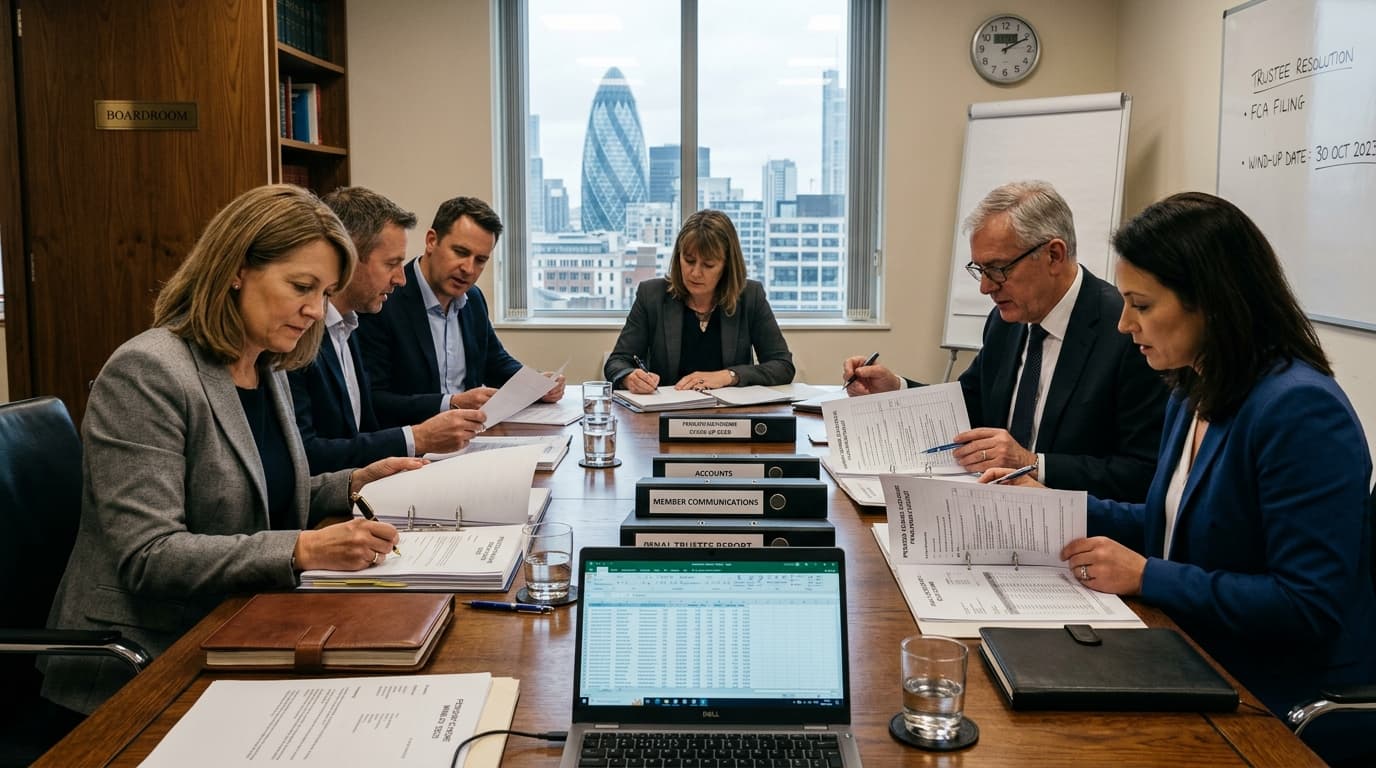
Unlike an employer's payroll pension or a standard personal pension, an SSAS does not benefit from a large institutional administrator managing compliance automatically. The buck stops with the trustees — and specifically with the nominated scheme administrator. Understanding the administration framework is essential for any SSAS trustee.
The key roles in SSAS administration are:
- Scheme Administrator: The person (or entity) registered with HMRC as responsible for the scheme's tax obligations
- Pensioneer Trustee: The independent professional trustee providing compliance oversight
- Member-Trustees: The directors/members who govern the scheme collectively
- Scheme Actuary: Not required for money purchase SSASs, but may be needed if the scheme has any defined benefit element
The Scheme Administrator's Role
The scheme administrator is registered with HMRC and carries statutory responsibilities for the scheme's tax compliance. In most SSASs, the pensioneer trustee firm acts as scheme administrator, though a member-trustee can take on this role.
The scheme administrator's duties include:
- Submitting the annual scheme return to HMRC
- Reporting "reportable events" to HMRC within required timescales (e.g., transfers to other schemes, serious ill health payments)
- Filing Accounting for Tax (AFT) returns where the scheme has made taxable payments
- Providing members with pension saving statements where Annual Allowance limits may be breached
- Managing the scheme's registration and updating HMRC of any changes
Failure to comply with these obligations can result in penalties and, in serious cases, de-registration of the scheme — which would strip all investments of their pension tax status. This is why having a professional pensioneer trustee as scheme administrator is strongly recommended.
Annual HMRC Return
Every registered pension scheme must submit an annual scheme return to HMRC. This return covers the tax year ended 5 April and must typically be submitted by 31 January of the following year. The return includes information on:
- Scheme membership numbers
- Contributions received
- Benefits paid
- The scheme's total asset value
- Any reportable events during the year
Matt Lenzie notes: "The annual return is not complicated, but it must be accurate. I have seen schemes where casual record-keeping made the return process far more difficult than it needed to be. Good real-time record-keeping throughout the year makes the annual compliance process straightforward."
Scheme Accounts
SSAS trustees are not legally required to prepare audited accounts (unlike larger occupational pension schemes), but they should maintain proper financial records including:
- A record of all income received (contributions, rental income, investment income)
- A record of all expenditure (benefit payments, fees, mortgage payments)
- Annual valuations of all assets
- A balance sheet showing total scheme assets and liabilities
Many pensioneer trustee firms prepare simple annual accounts for their SSAS clients as part of their service. These accounts are valuable not just for compliance but for members' own understanding of their pension wealth.
Trustee Meetings
Best practice requires at least one formal trustee meeting per year, with minutes taken and retained. For active SSASs — particularly those making property investments or managing a loanback — more frequent meetings are advisable.
Trustee meeting minutes should record:
- Investment decisions made and the rationale for them
- Any contributions received or expected
- Review of scheme accounts and asset values
- Any compliance matters raised by the pensioneer trustee
- Member benefit requests or changes in member circumstances
Record-Keeping Requirements
SSAS trustees must retain scheme records for at least six years. For property investments, certain documents (title deeds, RICS valuations, lease agreements) should be retained for the lifetime of the asset plus six years. The pensioneer trustee typically maintains the scheme's central documentation file, but member-trustees should retain copies of key documents.
Managing a Property-Owning SSAS
When an SSAS owns commercial property, the administration workload increases significantly. Additional administrative tasks include:
- Collecting and recording rental income
- Managing rent reviews (typically every three to five years) and ensuring rents remain at open market levels
- Managing the relationship with any letting agent or managing agent
- Overseeing property maintenance and ensuring the asset is maintained in good repair
- Managing any VAT implications (commercial property can be opted to tax, requiring VAT accounting)
- Dealing with mortgage lender requirements (insurance, valuations, covenant compliance)
For guidance on the property purchase process and post-completion obligations, see our article on post-completion SSAS property administration.
VAT in an SSAS
Where the SSAS's commercial property has been opted to tax for VAT purposes, the scheme becomes required to charge VAT on rental income and can reclaim VAT on purchase costs (including legal fees and RICS valuations). This requires VAT registration for the scheme and quarterly VAT returns. The pensioneer trustee or scheme accountant should manage this carefully.
Reporting Events to HMRC
Certain events within an SSAS must be reported to HMRC within 90 days of occurrence. These "reportable events" include:
- Transfer of assets out of the scheme to another registered scheme
- Payment of serious ill health lump sums
- Any arrangement that could constitute an unauthorised payment
Failure to report within 90 days incurs penalties. The pensioneer trustee will typically manage this reporting as part of their service.
Professional Support for SSAS Administration
Beyond the pensioneer trustee, a well-run SSAS typically has the following professional support in place:
- Solicitor: For property transactions, lease reviews, and any trustee legal questions
- Accountant: For scheme accounts, VAT returns, and integration with the company's financial statements
- RICS Surveyor: For property valuations and rent reviews
- IFA: For investment strategy, member benefit advice, and retirement planning
The cost of this professional team is a scheme expense that reduces the tax-free investment fund, but these costs are modest relative to the value of a well-administered, compliant scheme.
If you are considering acquiring commercial property through your SSAS and want to understand how the finance side works, contact our team or explore our SSAS property mortgage options.
"Good administration is what keeps an SSAS out of trouble with HMRC. It does not need to be complicated — a simple, disciplined approach to record-keeping and annual compliance does most of the job. The pensioneer trustee handles the specialist compliance; the trustees just need to stay engaged and organised."
— Matt Lenzie, Former Banker & Corporate Finance Partner
Key Takeaways
- The scheme administrator (usually the pensioneer trustee) is legally responsible for HMRC compliance
- Annual scheme returns must be submitted to HMRC by 31 January each year
- Records must be retained for at least six years; property documentation for longer
- Property-owning SSASs have additional administrative obligations around rents, VAT, and maintenance
- Certain events must be reported to HMRC within 90 days
- A professional support team (solicitor, accountant, surveyor) is essential for a well-run SSAS
About the Author
Matt Lenzie
Former Banker & Corporate Finance Partner
Matt Lenzie is a former banker and corporate finance partner with extensive experience in pension-backed property transactions. He founded SSAS Property Finance to help company directors and trustees navigate the complexities of commercial property acquisition through Small Self-Administered Schemes.