SSAS Office Purchase: A £500k Worked Example
Written by Matt Lenzie
Former Banker & Corporate Finance Partner
SSAS Office Purchase: A £500,000 Worked Example
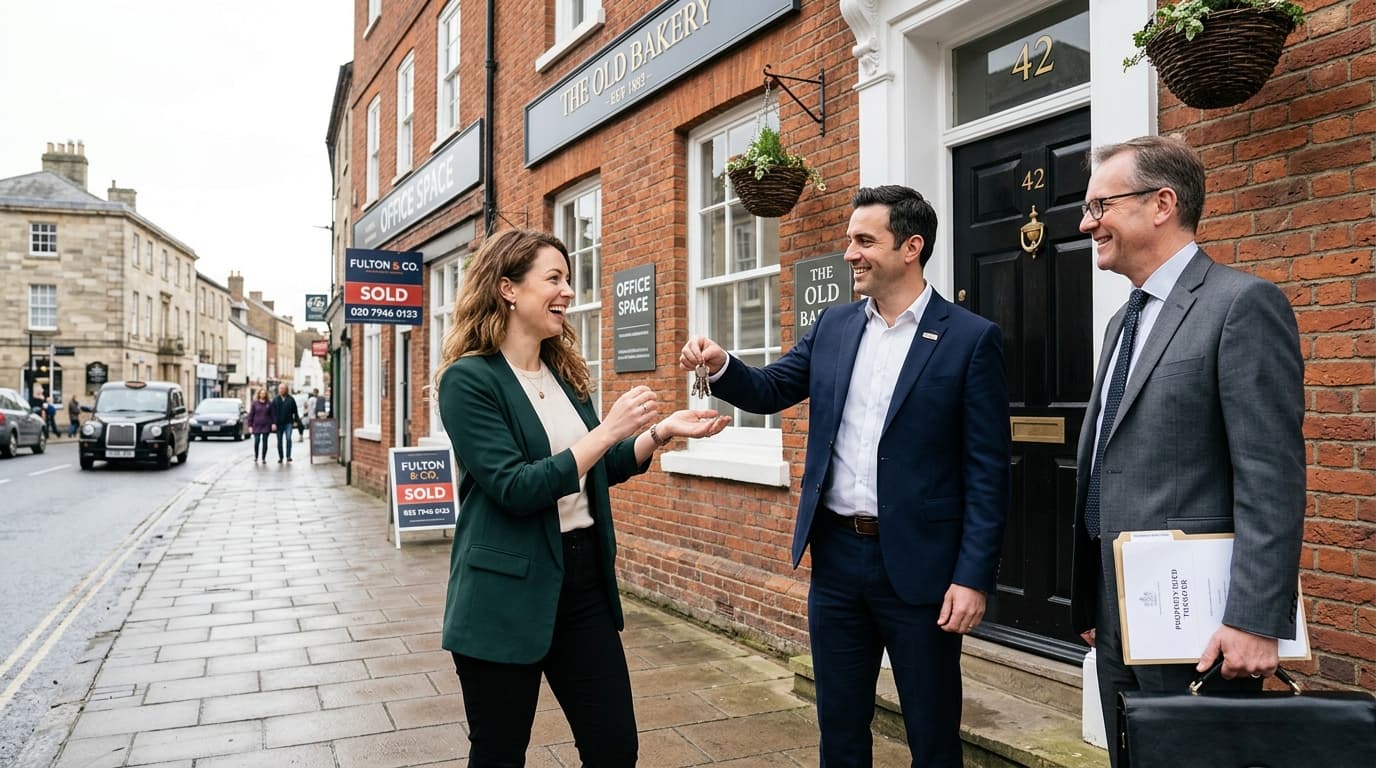
One of the most common questions we receive from business owners exploring SSAS property finance is simply: "Can you show me how this actually works?" In this article, we walk through a detailed, realistic example of an SSAS purchasing a £500,000 commercial office — from pooling funds and securing a mortgage through to completing the purchase and setting up a connected party lease.
This is not a fictional scenario. It closely mirrors deals we have structured for clients across the UK, with figures adjusted for illustrative purposes. If you would like to discuss your own situation, speak to our team directly.
The Scenario: Four Directors, One SSAS, One Office
Our example involves four company directors — all shareholders in the same trading business — who established an SSAS three years ago. Between them, the scheme holds £380,000 in pension assets, a mix of cash and listed investments transferred in at setup.
The business currently occupies leased office space at a cost of £36,000 per year. The directors have identified a freehold office building on the market for £500,000. They want the SSAS to purchase it, and then lease the space back to their company.
This is a textbook connected party transaction. Done correctly, it is entirely HMRC-compliant and tax-efficient. Done incorrectly, it can trigger significant tax charges. Structure is everything.
Step 1: Assessing Affordability and Loan-to-Value
The SSAS has £380,000 in assets. Under most lender criteria for SSAS commercial mortgages, the scheme can borrow up to 50% of the property's value. On a £500,000 purchase, that means a maximum loan of £250,000.
The required equity contribution from the SSAS is therefore £250,000 (50%) plus acquisition costs (stamp duty land tax, legal fees, survey fees) of approximately £22,000. Total funds required from the scheme: £272,000.
With £380,000 in assets, the SSAS has sufficient headroom — but only if those assets can be realised. In this case, the listed investments (£180,000) need to be sold down and the proceeds held as cash. The remaining £200,000 in cash is already liquid.
Use our SSAS mortgage calculator to model your own scenario before speaking to a lender.
Step 2: The Mortgage Application
The SSAS trustees approach a specialist SSAS lender through a commercial mortgage broker with experience in pension-led funding. Standard high-street lenders do not offer SSAS mortgages — this is a niche product requiring a lender who understands the trust structure and HMRC requirements.
Key underwriting criteria assessed by the lender:
- Rental income coverage: The proposed rent (£36,000 per year) must cover the mortgage interest by at least 125-150%, depending on the lender. At a 6.5% interest rate on £250,000, annual interest is £16,250. Coverage ratio is 2.2x — comfortably within criteria.
- Scheme fund size: Most lenders require the SSAS fund to be at least equal to the loan amount post-purchase. £130,000 remaining assets after the equity contribution provides adequate comfort.
- Scheme maturity: The scheme has been running three years, which satisfies most lenders' minimum operational period requirements.
- Professional trustee: The scheme has a professional trustee appointed, which is a requirement for most specialist lenders.
- Property valuation: A RICS-qualified surveyor values the property at £500,000 on an open market basis and at £480,000 on a 180-day forced sale basis. Both figures support the purchase price.
The lender issues a Decision in Principle within five working days. Full application is submitted with the scheme's actuarial valuation, trust deed, and three years of scheme accounts.
Step 3: The Connected Party Lease
Once the mortgage is confirmed, solicitors must draft the lease between the SSAS (as landlord) and the trading company (as tenant). This is a connected party transaction because the company directors are also SSAS members.
HMRC requires that the lease terms be demonstrably commercial. This means:
- Rent must be set at open market value — confirmed by an independent surveyor's rental assessment
- Lease length must be appropriate for the property type (typically 10-25 years for commercial offices)
- Rent review provisions must be included (typically every three or five years)
- The tenant must be responsible for repairs, insurance, and other outgoings typical of a full repairing and insuring lease
In our example, the surveyor confirms an open market rent of £36,000 per year. A 15-year lease is agreed with five-year upward-only rent reviews. The company signs as tenant.
"In our experience, the connected party lease is the element most likely to go wrong if clients try to DIY this. The rent must be independently assessed and must genuinely reflect market value — not what's convenient for the company's cashflow. HMRC has strong powers to challenge arrangements they consider non-commercial." — Matt Lenzie
Step 4: Completion and Post-Purchase Administration
Completion follows the standard conveyancing process, with the SSAS trustees named as the legal owners. The property is registered at HM Land Registry in the names of the trustees on behalf of the scheme.
Post-completion, the scheme administrator must:
- Update the scheme's asset register to reflect the property
- Ensure the mortgage is recorded as a liability in the scheme accounts
- Confirm the lease is in place and rent collection arrangements are set up
- Report the transaction to HMRC via the scheme's annual return
The Financial Outcome: Year One
Let's look at what this transaction delivers financially in year one:
- Rental income to SSAS: £36,000
- Mortgage interest (at 6.5% on £250,000): £16,250
- Net income to SSAS after interest: £19,750
- Corporation tax on company rent payments: The company deducts £36,000 as a business expense, saving approximately £9,000 in corporation tax (at 25%)
- Capital appreciation potential: Commercial property in the area has averaged 3-4% per year over the past decade
The company redirects what was previously rent to an external landlord into the pension scheme. The pension scheme grows tax-free. And when the directors eventually draw down their pensions, the property can be sold — with any capital gain accruing entirely within the tax-exempt pension wrapper.
Key Risks to Understand
No worked example is complete without addressing the risks:
- Concentration risk: A single property can represent a large proportion of scheme assets. If the property market falls, the scheme's overall value falls with it.
- Illiquidity: Commercial property cannot be sold quickly. If members need to draw benefits sooner than expected, the scheme must have sufficient liquid assets or the property must be sold.
- Tenant risk: If the company (the tenant) runs into financial difficulty, rental income to the SSAS could be interrupted. The SSAS would still be liable for the mortgage.
- Regulatory risk: HMRC can and does challenge arrangements it considers non-commercial. Professional advice and thorough documentation are essential.
Is This Right for Your Business?
The scenario above represents a well-structured, commercially sensible SSAS property purchase. But every situation is different. The key variables — fund size, member ages, business profitability, property location, and long-term plans — all affect whether this strategy makes sense for you.
For more context on how the mortgage itself works, read our guide on SSAS property mortgages. For case studies involving different property types, see our articles on industrial unit refinancing and warehouse acquisitions.
Key Takeaways
- SSAS schemes can borrow up to 50% LTV to purchase commercial property
- Connected party leases must be at independently assessed open market rents
- Rental income flows into the scheme tax-free; the company claims a tax deduction
- Professional trustees and specialist lenders are non-negotiable for this structure
- Concentration and illiquidity risks must be assessed before proceeding
Next Steps
If you are considering an SSAS office purchase, the first step is understanding your scheme's current position and what a lender will make of it. Our team has structured hundreds of SSAS property transactions and can give you a clear picture of what is achievable. Get in touch today or explore our panel of specialist SSAS lenders to understand the market.
About the Author
Matt Lenzie
Former Banker & Corporate Finance Partner
Matt Lenzie is a former banker and corporate finance partner with extensive experience in pension-backed property transactions. He founded SSAS Property Finance to help company directors and trustees navigate the complexities of commercial property acquisition through Small Self-Administered Schemes.