SSAS Agricultural Land Investment: Farmland and Pasture in Your Pension
Written by Matt Lenzie
Former Banker & Corporate Finance Partner
SSAS Agricultural Land Investment: An Often-Overlooked Opportunity
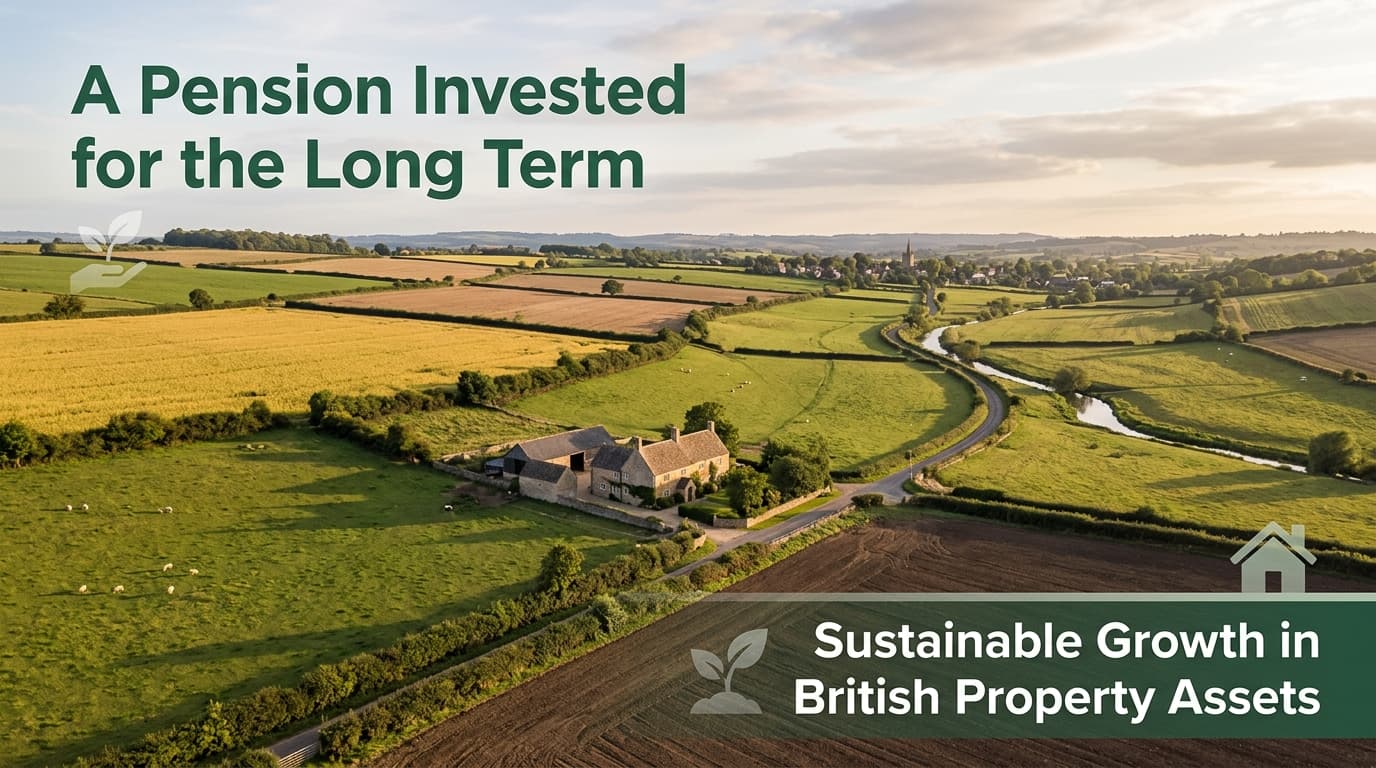
Agricultural land represents one of the more unusual but genuinely compelling investment opportunities for SSAS pension schemes. UK farmland has delivered strong long-term capital growth driven by structural factors including limited supply, food security concerns, and growing demand for land as a natural capital asset. For SSAS trustees, agricultural land offers access to these returns within the tax-free pension wrapper.
However, agricultural land investment within a SSAS requires careful navigation — particularly around the residential property rules (farmhouses are taxable property), planning considerations, and the management of agricultural tenancies.
What Agricultural Assets Can a SSAS Hold?
A SSAS can hold agricultural land as an investment asset, but the rules on what qualifies are specific:
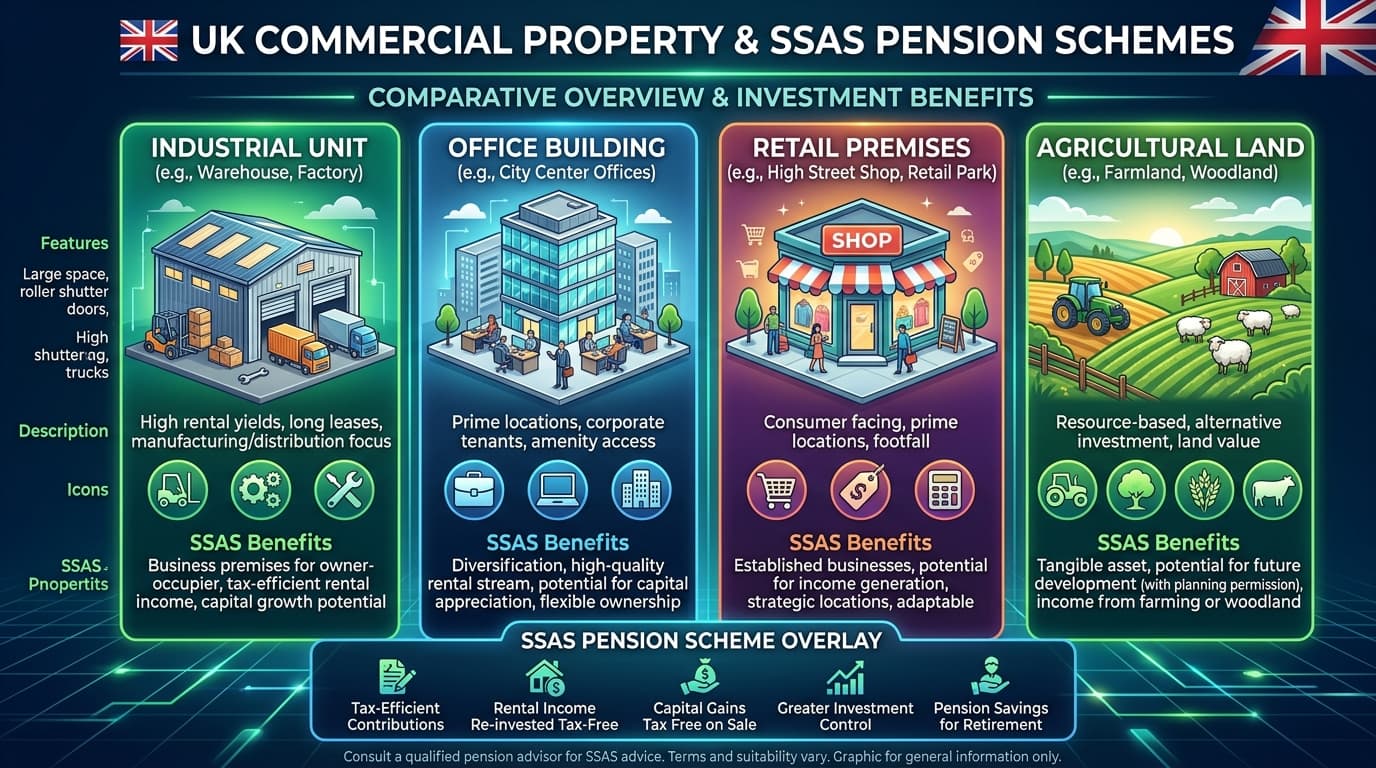
- Bare agricultural land: Arable, pasture, or grazing land without any buildings qualifies as a commercial investment asset. This is the cleanest and most straightforward type of agricultural land investment for SSAS purposes
- Agricultural land with buildings: The treatment depends on the nature of the buildings. Agricultural outbuildings (barns, grain stores, machinery sheds) used for farming are generally commercial in nature. However, any residential dwelling on the land — including a farmhouse — constitutes taxable property
- Hobby or lifestyle farms: Land used primarily for recreational purposes (hobby farms, equestrian use) may not qualify as a genuine commercial investment — HMRC requires the investment to have a genuine commercial purpose
The Farmhouse Problem
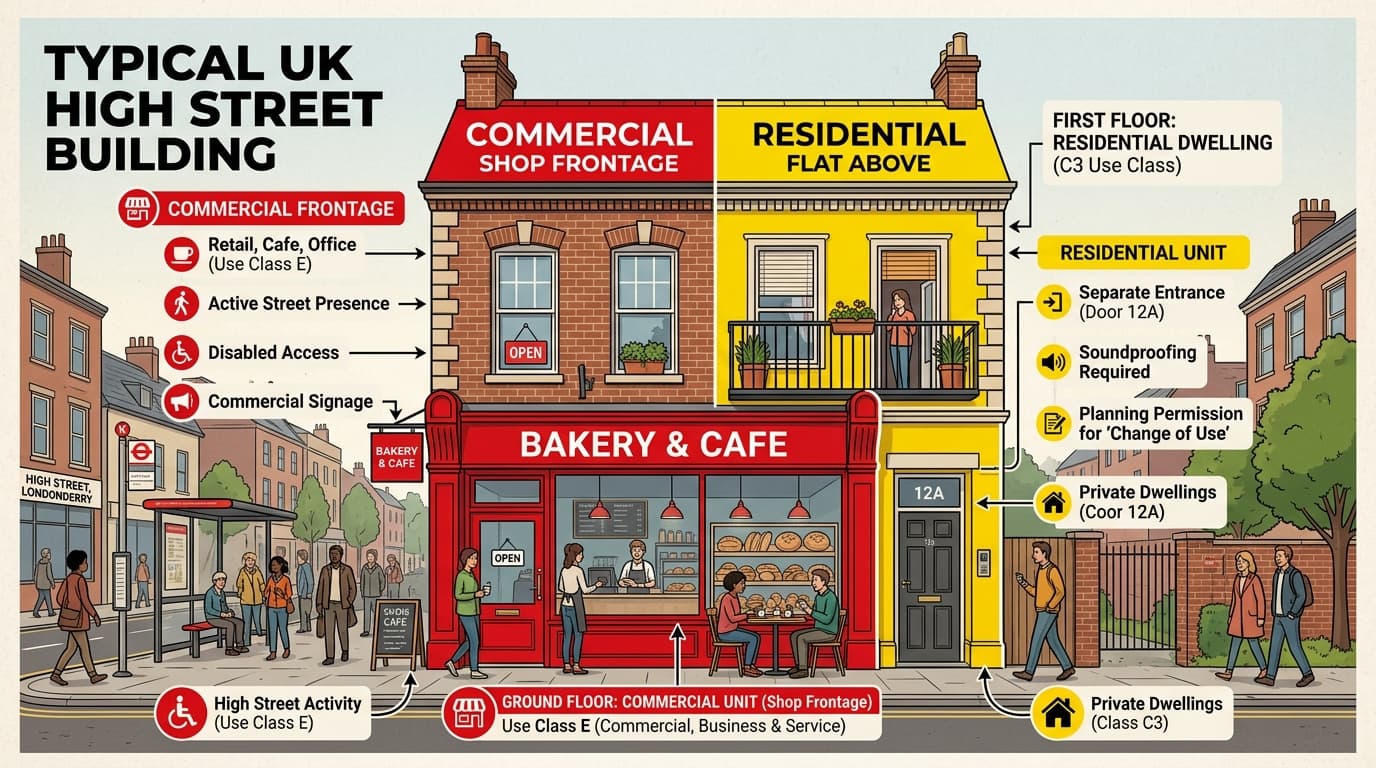
The most important compliance issue for SSAS agricultural land investment is the farmhouse. Any residential building on agricultural land is taxable property under HMRC's rules. If the SSAS acquires a farm that includes a farmhouse, the farmhouse element constitutes taxable property and triggers unauthorised payment and scheme sanction charges.
Solutions to this problem include:
- Purchasing bare land only (no farmhouse) — this is the simplest approach
- Arranging a title split so the SSAS acquires the land while the farmhouse is held separately
- Working with the vendor to sell the land and farmhouse as separate lots
See our guide on SSAS mixed-use property for a fuller discussion of the residential element issue.
Generating Rental Income from Agricultural Land
Agricultural land within a SSAS can generate rental income in several ways:
- Traditional agricultural tenancies: Under the Agricultural Tenancies Act 1995 (Farm Business Tenancies), land can be let to a farmer on agreed terms. Rental rates for agricultural land vary by region, quality of land, and access to water/services
- Grazing licences: Short-term arrangements for grazing livestock provide flexibility but less income security than a formal tenancy
- Environmental stewardship income: Agricultural land enrolled in government environmental stewardship schemes (including the Sustainable Farming Incentive) can generate income from public sector payments
- Carbon offsetting and biodiversity net gain: Increasingly, landowners are generating income from natural capital credits — the opportunity for SSAS-held agricultural land to participate in these markets is growing
Matt Lenzie notes: "Agricultural land is one of those SSAS investments that works on multiple levels simultaneously — rental income from farming, potential income from environmental schemes, and long-term capital growth driven by fundamental supply constraints. For clients with an interest in land and farming, it's a compelling addition to a pension portfolio."
Capital Growth in UK Agricultural Land
UK agricultural land values have risen significantly over the long term. According to RICS and CAAV data, average arable land values have more than doubled over the past two decades in many parts of England. Driving factors include:
- Limited supply — the UK has a fixed stock of agricultural land and conversion to development is tightly controlled
- Non-farming demand — investors, renewable energy developers, and environmental buyers competing with farmers
- Food security — heightened awareness of food supply vulnerability following COVID-19 and geopolitical instability
- Natural capital — growing value attributed to land's environmental and biodiversity functions
All capital growth within the SSAS is CGT-free, making the long-term appreciation of agricultural land particularly valuable in the pension wrapper.
Planning Considerations for Agricultural Land
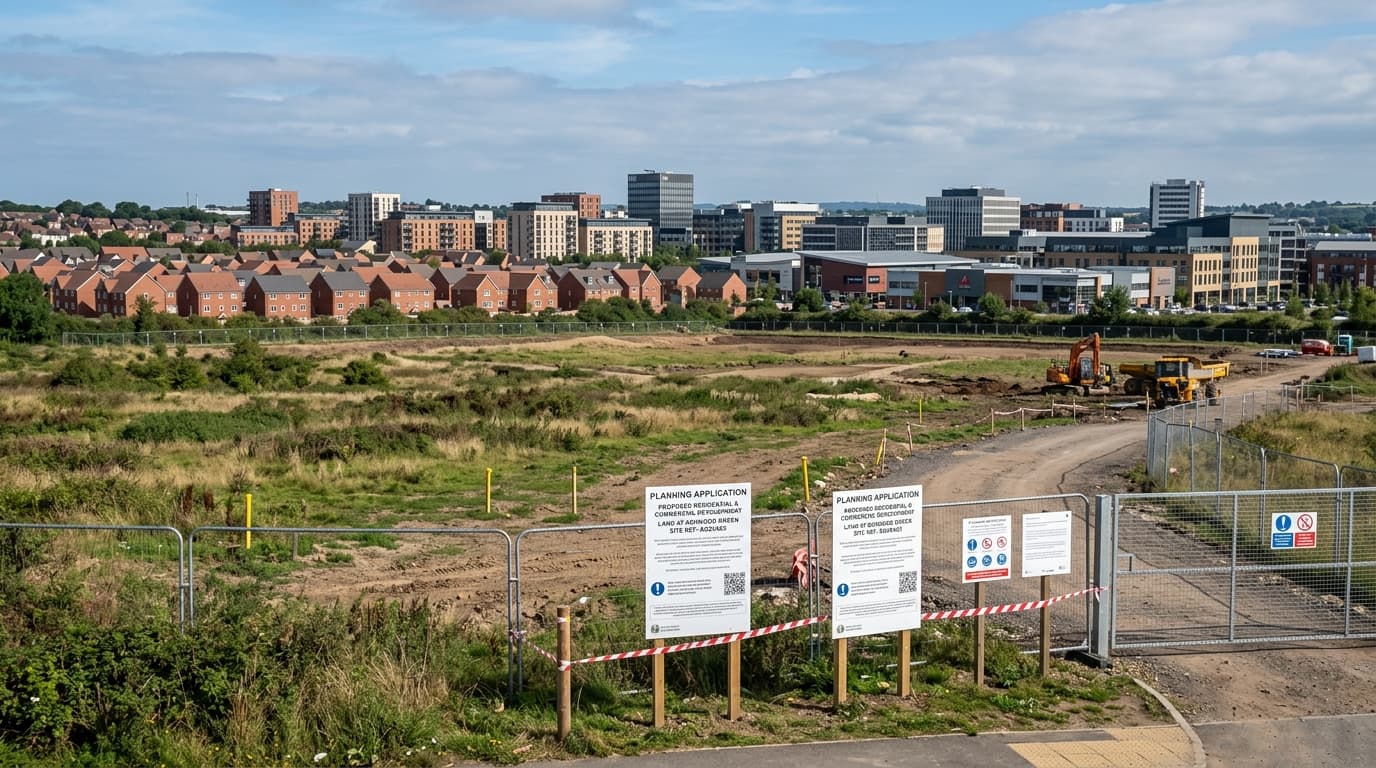
Agricultural land investment within a SSAS can benefit from planning uplift — the increase in value that occurs when planning permission is granted for development. However, development land strategy within a SSAS requires careful management to ensure the investment remains within the scheme's permitted activity.
For detail on development land, see our guide on SSAS development land investment.
Financing Agricultural Land Through a SSAS
Agricultural land finance within a SSAS is more specialist than mainstream commercial property lending. Not all SSAS mortgage lenders are active in agricultural finance, but the market has developed in recent years. Key considerations include:
- Bare land with no buildings or income stream may require a higher equity contribution
- Land with a farm business tenancy in place is more financeable than vacant land
- Some specialist agricultural lenders can provide SSAS-compatible finance
Use our SSAS mortgage calculator to model financing scenarios and contact us to discuss agricultural land finance options.
Key Takeaways
- Bare agricultural land qualifies as a SSAS investment asset — farmhouses do not
- Agricultural tenancies, environmental stewardship, and natural capital payments can generate tax-free rental income
- UK agricultural land has delivered strong long-term capital growth, all of which is CGT-free within the SSAS
- The farmhouse problem requires a title split or bare land acquisition to preserve SSAS compliance
- Agricultural finance for SSAS schemes is more specialist but available from select lenders
Explore Agricultural Land Investment for Your SSAS
Contact our team to discuss agricultural land investment within a SSAS, or explore our guides on development land and choosing the right property type.
About the Author
Matt Lenzie
Former Banker & Corporate Finance Partner
Matt Lenzie is a former banker and corporate finance partner with extensive experience in pension-backed property transactions. He founded SSAS Property Finance to help company directors and trustees navigate the complexities of commercial property acquisition through Small Self-Administered Schemes.