SSAS Development Land: Investing in Land with Planning Potential Through Your Pension
Written by Matt Lenzie
Former Banker & Corporate Finance Partner
SSAS Development Land: Capturing Planning Gain in Your Pension
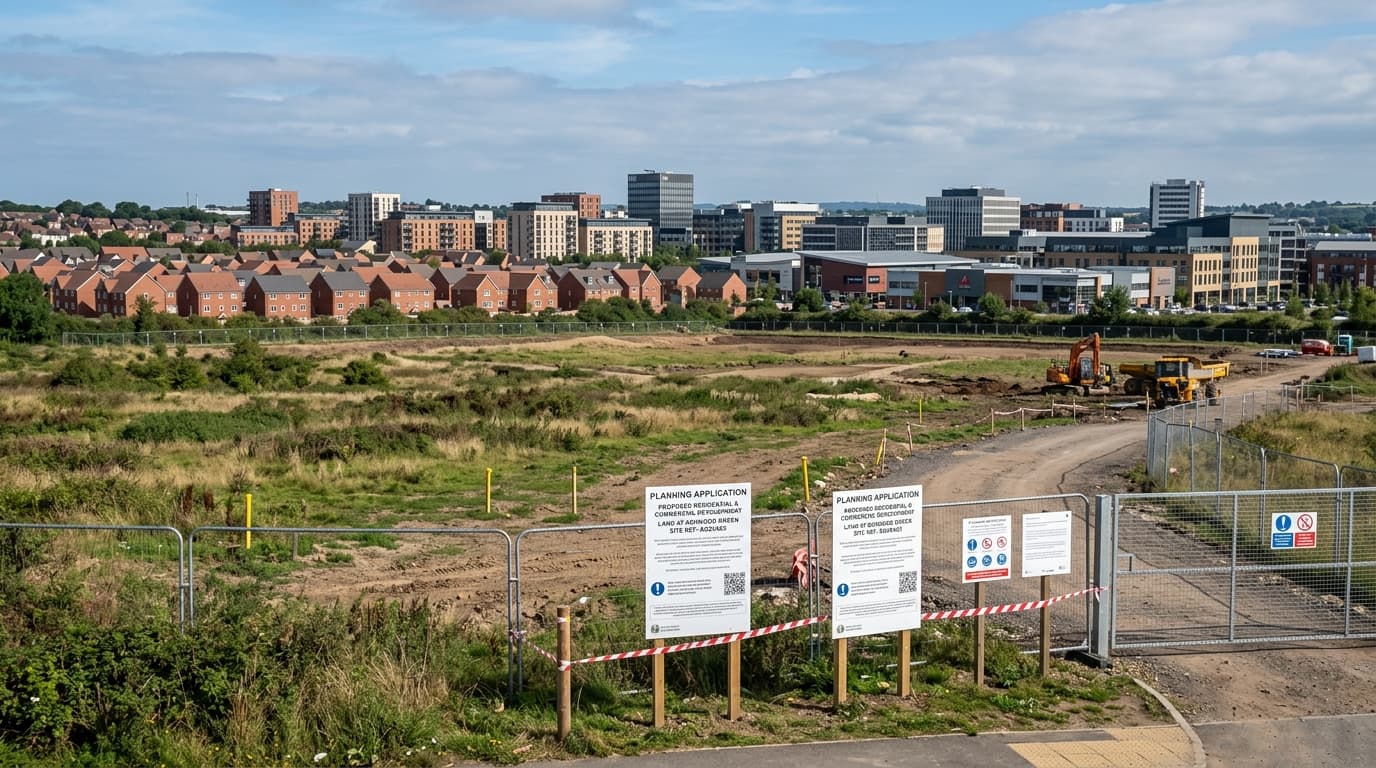
Development land — land that has planning permission for development, or that is likely to obtain planning permission — can deliver exceptional returns for investors. The uplift in value that occurs when agricultural or commercial land gains planning permission for residential or commercial development can be many multiples of the original land value.
For SSAS pension scheme trustees, the ability to capture this planning gain within the tax-free pension wrapper — free from capital gains tax — makes development land investment potentially transformative. However, the rules governing how SSAS schemes can hold and deal in development land require careful understanding.
The Investment vs. Trading Distinction
The fundamental rule for SSAS land investment is that the scheme must be an investor, not a trader. HMRC's pension scheme rules envisage pension funds holding assets for investment purposes — to generate income and capital appreciation. A scheme that buys and sells land repeatedly, with the primary purpose of making profits from land transactions (rather than holding assets for long-term returns), may be treated as carrying on a trade.
The implications of being treated as a trading entity are severe: trading profits are not entitled to the same tax protections as investment returns, and the scheme's registered status could be threatened.
Key factors HMRC considers when assessing whether land activity constitutes trading include:
- The frequency and pattern of land transactions
- The length of time the land is held before sale
- The nature and extent of development activity undertaken before sale
- The intention at the time of acquisition
- Whether the scheme is actively seeking planning permission or selling land "with the benefit of" planning
In practice, a SSAS that purchases land, holds it as a long-term investment, and then sells it after obtaining planning permission (or after planning permission is granted by a third party) is likely to be viewed as an investor. A SSAS that frequently buys and sells parcels of land, or that undertakes extensive development activity before selling, is more likely to be characterised as a trader.
Types of Development Land Investment
The development land spectrum includes several different types of opportunity for SSAS investors:
- Greenfield land with planning potential: Agricultural or undeveloped land in areas likely to receive planning allocation. Long holding period (often 5-15 years) before planning consent is obtained — suits the long-term investment horizon of a pension scheme
- Brownfield land: Previously developed land with planning history. Typically a faster planning journey and higher initial value than pure greenfield
- Land with outline planning permission: Land where outline consent for development has already been granted — the value uplift has partially occurred, but detailed planning and development still to follow
- Land with full planning permission: Fully consented land ready for development. The highest value within the land spectrum, often most relevant for schemes that want to sell to a developer and crystallise the gain
Passive vs. Active Development Land Strategy
For SSAS schemes, a passive development land strategy is generally safer from a trading risk perspective than an active one:
- Passive strategy: Purchase land, hold it, and sell when planning permission is obtained (whether applied for by the SSAS or by a third-party promoter). Minimal active development activity by the SSAS itself
- Active strategy: SSAS actively promotes the land for planning, engages planning consultants, and undertakes pre-development infrastructure work. Higher potential returns but higher trading risk
Matt Lenzie notes: "For SSAS development land investment, I generally favour the passive approach — buy good land in the right location, give it time, and let the planning system work. The returns can be excellent, and the tax treatment within the SSAS (no CGT on the uplift) makes even a modest planning gain highly valuable net of tax."
Promoted Land: A Useful Structure for SSAS Schemes
Land promotion agreements — where a specialist land promoter takes on the role of obtaining planning permission in exchange for a share of the uplift — can be an effective way for SSAS trustees to access development land returns without the need for active management or planning expertise.
Under a promotion agreement:
- The SSAS owns the land and contributes it to the promotion agreement
- The promoter manages the planning application process and bears the costs
- Upon planning permission being obtained and the land being sold, the promoter receives a percentage (typically 20-30%) of the proceeds
- The SSAS receives the balance — potentially a large multiple of the original purchase price
The passive nature of the SSAS's involvement in a promoted land deal supports the investment (not trading) characterisation.
Development Land Financing Through a SSAS
Development land without planning permission typically has limited income generation, which makes SSAS mortgage finance challenging. Lenders generally require income cover for SSAS loans, and bare development land without a tenant may not meet their criteria.
Options include:
- Funding the land purchase entirely from SSAS contributions without borrowing
- Bridging finance for shorter-term land opportunities, though this may be expensive
- Land with an existing commercial use and tenancy may support conventional SSAS mortgage finance
Use our SSAS mortgage calculator to model different financing scenarios. Contact us to discuss development land finance options.
Key Takeaways
- Development land can generate exceptional returns for SSAS schemes, all CGT-free within the pension wrapper
- SSAS schemes must be investors, not traders — the frequency and nature of land transactions affects HMRC's classification
- A passive, long-term investment strategy is generally safer than active development promotion
- Land promotion agreements allow SSAS trustees to access planning gains without active management
- Financing bare development land is challenging — most SSAS loans require an income-producing asset as security
Explore Development Land Investment for Your SSAS
Contact our team to discuss development land investment within your SSAS. For related reading, see our guides on agricultural land investment and SSAS capital gains tax exemption.
About the Author
Matt Lenzie
Former Banker & Corporate Finance Partner
Matt Lenzie is a former banker and corporate finance partner with extensive experience in pension-backed property transactions. He founded SSAS Property Finance to help company directors and trustees navigate the complexities of commercial property acquisition through Small Self-Administered Schemes.