Choosing the Right Property Type for Your SSAS: A Comprehensive Comparison Guide
Written by Matt Lenzie
Former Banker & Corporate Finance Partner
Choosing the Right Property Type for Your SSAS: The Complete Guide
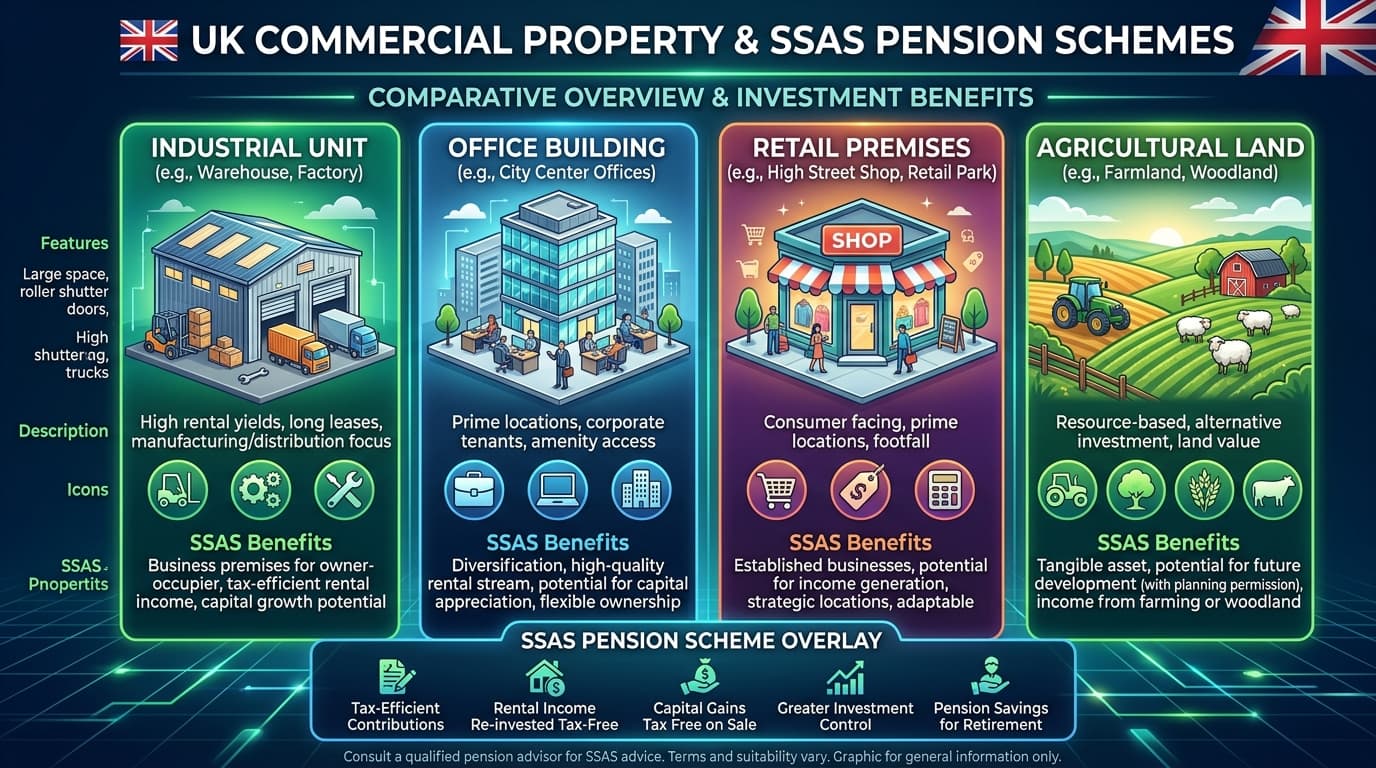
One of the most significant decisions facing SSAS pension trustees is which type of commercial property to invest in. The UK commercial property market encompasses a wide range of asset classes — from straightforward industrial units to complex hospitality assets — each with different income characteristics, risk profiles, management requirements, and HMRC compliance considerations.
This guide provides a comprehensive comparison across the main property types available to SSAS investors, helping trustees make informed decisions that align with their investment objectives, risk tolerance, and the specific circumstances of their business and pension scheme.
The Non-Negotiable Rule: Commercial Only
Before comparing property types, it is essential to restate the fundamental rule: SSAS pension schemes can only hold commercial property. Residential property — including buy-to-let investments — is explicitly excluded and constitutes "taxable property" under HMRC rules. Acquiring residential property within a SSAS triggers unauthorised payment charges and scheme sanction charges that can total 55% or more of the value involved.
This rule applies equally to any residential element within a predominantly commercial property (such as a flat above a shop). See our guide on SSAS mixed-use property for detailed guidance on how to handle properties with any residential element.
Property Type Comparison: The Key Dimensions
We assess each property type across five key dimensions:
- Income yield: The rental income return relative to capital value
- Capital growth potential: The long-term appreciation prospects
- Connected party suitability: How naturally the property type fits as business premises for the sponsoring employer
- Management complexity: The ongoing management burden on trustees
- HMRC compliance risk: The risk of inadvertent non-compliance
Industrial and Warehouse Property
Income yield: 5-8% gross initial yield in most regional markets
Capital growth: Strong over the past decade; structural demand drivers remain
Connected party suitability: Excellent for manufacturing, trade, logistics, and distribution businesses
Management complexity: Low — FRI leases mean tenants bear repairing and insurance responsibilities
HMRC compliance risk: Low — unambiguously commercial
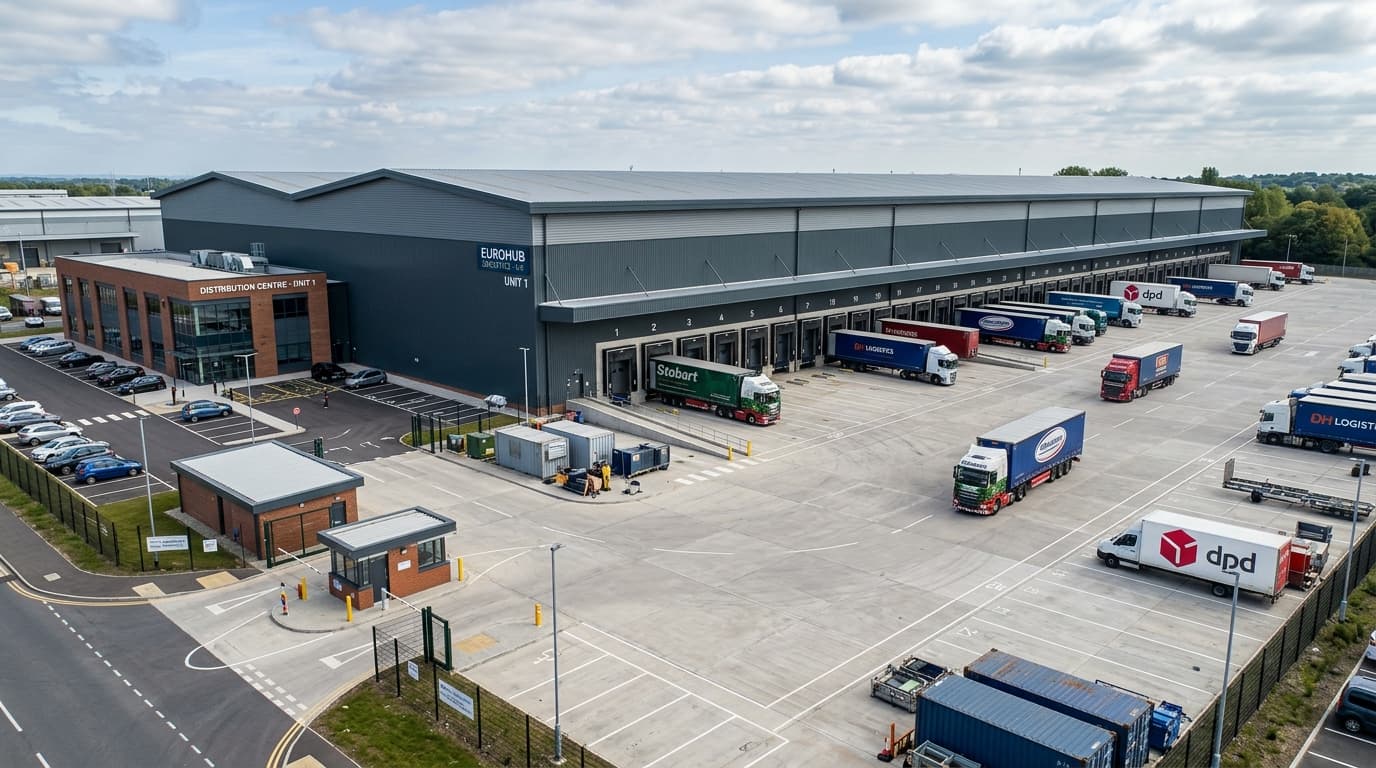
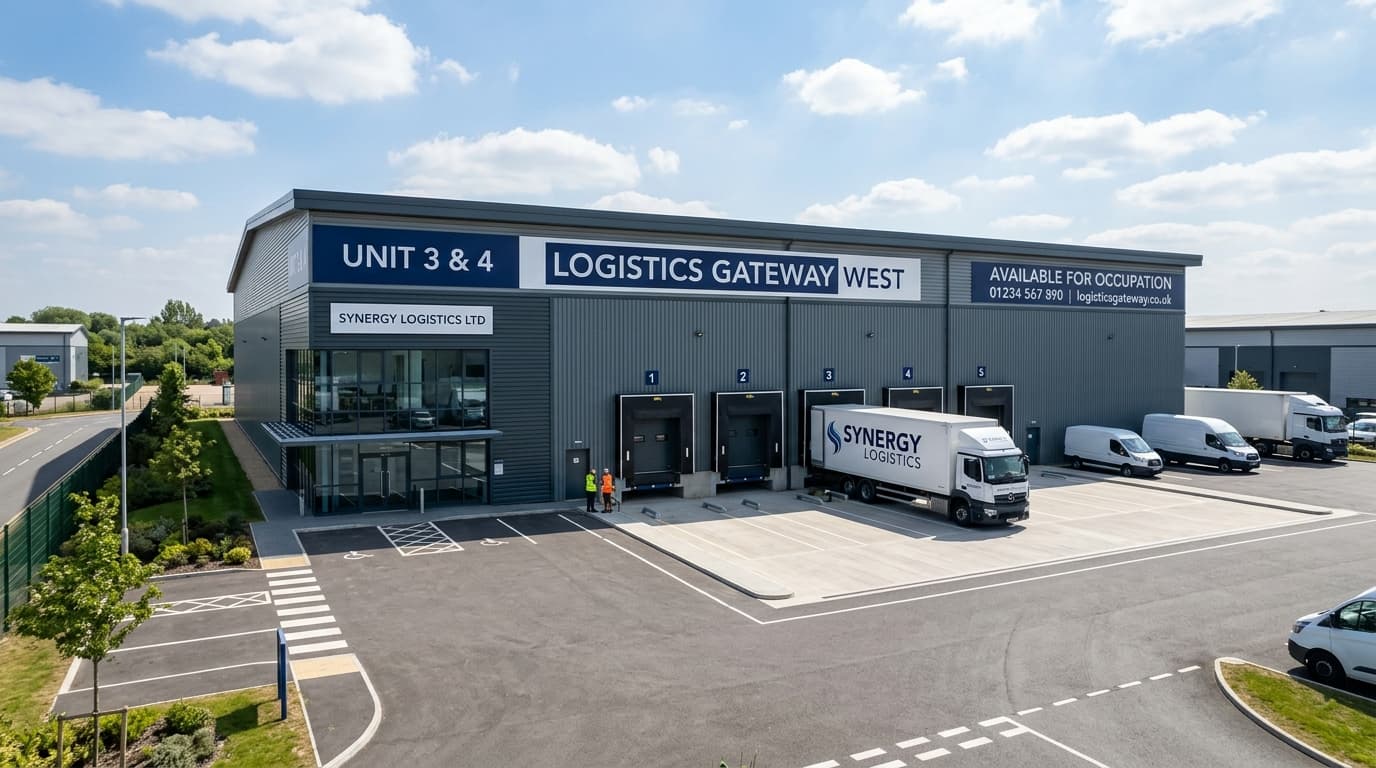
Industrial and warehouse property is the highest-rated asset class for most SSAS investors. Strong market fundamentals, simple management, and clear commercial classification make it a natural first choice. For business owners in manufacturing, logistics, or trade sectors, the connected party lease opportunity is particularly powerful.
See our dedicated guides on SSAS industrial unit investment and SSAS warehouse investment.
Office Property
Income yield: 5-7% in regional markets; lower in prime central locations
Capital growth: Variable — strong for prime Grade A; weaker for secondary
Connected party suitability: Excellent for professional services, technology, and financial businesses
Management complexity: Moderate — service charges, fit-out requirements
HMRC compliance risk: Low — clearly commercial
Office property remains widely held in SSAS schemes, particularly where the sponsoring employer occupies the space. The post-COVID polarisation between prime Grade A and secondary offices requires careful asset selection. EPC compliance is an increasing consideration. See our guide on SSAS office property investment.
Retail Property
Income yield: 6-10%+ in many locations (elevated yields reflecting risk)
Capital growth: Negative to flat in many locations; selective opportunities exist
Connected party suitability: Natural for retail businesses, food and beverage operators, trade counter businesses
Management complexity: Moderate to high — tenant management, lease renegotiation, void costs
HMRC compliance risk: Low for purely commercial retail; caution needed for flats above shops
Retail property requires selectivity and expertise. High initial yields may not compensate for the capital value risk in some locations. Best suited to trustees with retail sector knowledge or where the tenant is a connected business. See our guide on SSAS retail premises investment.
Agricultural Land
Income yield: 2-3% from agricultural rents (but enhanced by environmental scheme payments)
Capital growth: Strong long-term appreciation driven by structural supply constraints
Connected party suitability: Limited to farming, food production, or agribusiness operators
Management complexity: Moderate — tenancy management, environmental compliance
HMRC compliance risk: Moderate — farmhouse exclusion requires careful structuring
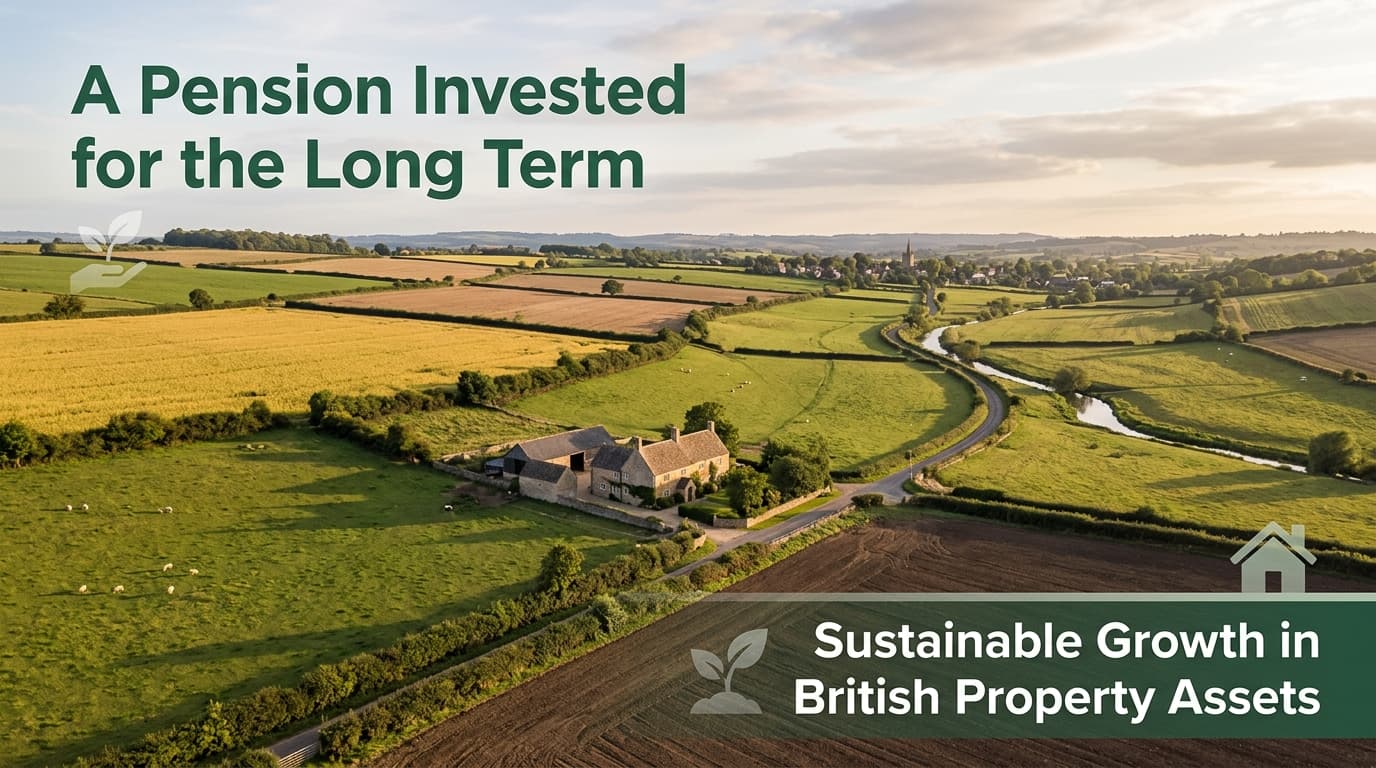
Agricultural land is a patient investor's asset — lower income yields but strong capital appreciation and inflation protection. The farmhouse exclusion requires careful management. Increasingly attractive as natural capital and environmental income streams develop. See our guide on SSAS agricultural land investment.
Specialist Assets (Care Homes, Hotels)
Income yield: 6-9% for care homes; variable for hotels
Capital growth: Demographic-driven for care homes; market-dependent for hotels
Connected party suitability: Limited to healthcare and hospitality operators
Management complexity: High — specialist operators, regulatory oversight
HMRC compliance risk: Moderate to high — commercial classification requires specialist confirmation
Specialist assets offer attractive income yields and structural demand drivers but require specialist knowledge, operators, and advisers. Not suitable for inexperienced SSAS investors without appropriate professional support. See our guides on SSAS care home investment and SSAS hotel property investment.
Development Land
Income yield: Typically nil to low (development land rarely produces meaningful income)
Capital growth: Potentially exceptional — planning gain can multiply values
Connected party suitability: Limited to developers, housebuilders, and land promoters
Management complexity: Low for passive holdings; high for actively promoted land
HMRC compliance risk: Moderate — investment vs. trading distinction requires careful management
Development land is a high-risk, high-reward category best suited to SSAS trustees with long investment horizons and specific land investment expertise. The CGT-free planning gain within the pension wrapper is the primary attraction. See our guide on SSAS development land investment.
Which Property Type Is Right for Your SSAS?
Matt Lenzie notes: "The right property type for a SSAS almost always starts with the sponsor employer's business. If you're a manufacturer, industrial property is a natural fit. If you're a professional services business, offices make sense. Starting with what you know — your own sector, your own market — gives you an immediate knowledge advantage and the connected party lease opportunity makes the numbers work hard."
Key decision factors for trustees include:
- What does the sponsoring employer's business need? Is there a connected party lease opportunity?
- What is the scheme's risk appetite? Industrial and warehouse property is lower risk than retail or specialist assets
- What management resource is available? Multi-let or specialist properties require more oversight
- What is the scheme's investment horizon? Agricultural and development land suit longer horizons
- What specialist knowledge does the trustee group have? Investing in sectors you understand reduces risk
The Multi-Property SSAS Portfolio
For larger SSAS schemes with significant accumulated funds, a diversified portfolio across different property types and geographies can reduce risk while maintaining the tax efficiency of SSAS property investment. A combination of reliable income-generating industrial assets and higher-growth development land or agricultural holdings can produce a balanced long-term investment strategy.
Key Takeaways
- Industrial and warehouse property offers the best combination of yield, growth, and simplicity for most SSAS investors
- Office property is excellent for professional services and technology businesses with a connected party lease
- Retail requires selectivity and expertise — not all retail property is suitable for SSAS investment
- Agricultural land offers inflation protection and long-term growth for patient investors
- Specialist assets (care homes, hotels) offer attractive yields but require specialist knowledge and advisers
- Development land is high risk/high reward and suits specific investor profiles
Get Expert Guidance on Your SSAS Property Strategy
Choosing the right property type for your SSAS — and then finding, financing, and acquiring the right property within that type — requires expertise across pension law, property investment, and tax planning. Our team can guide you through the entire process.
Contact us to discuss your SSAS property investment strategy, or use our SSAS mortgage calculator to model the financing for your target property. Explore our panel of SSAS mortgage lenders to understand the financing options available.
For further reading, see our guides on tax-free rental income, CGT exemption, and the SSAS property finance options we arrange.
About the Author
Matt Lenzie
Former Banker & Corporate Finance Partner
Matt Lenzie is a former banker and corporate finance partner with extensive experience in pension-backed property transactions. He founded SSAS Property Finance to help company directors and trustees navigate the complexities of commercial property acquisition through Small Self-Administered Schemes.